
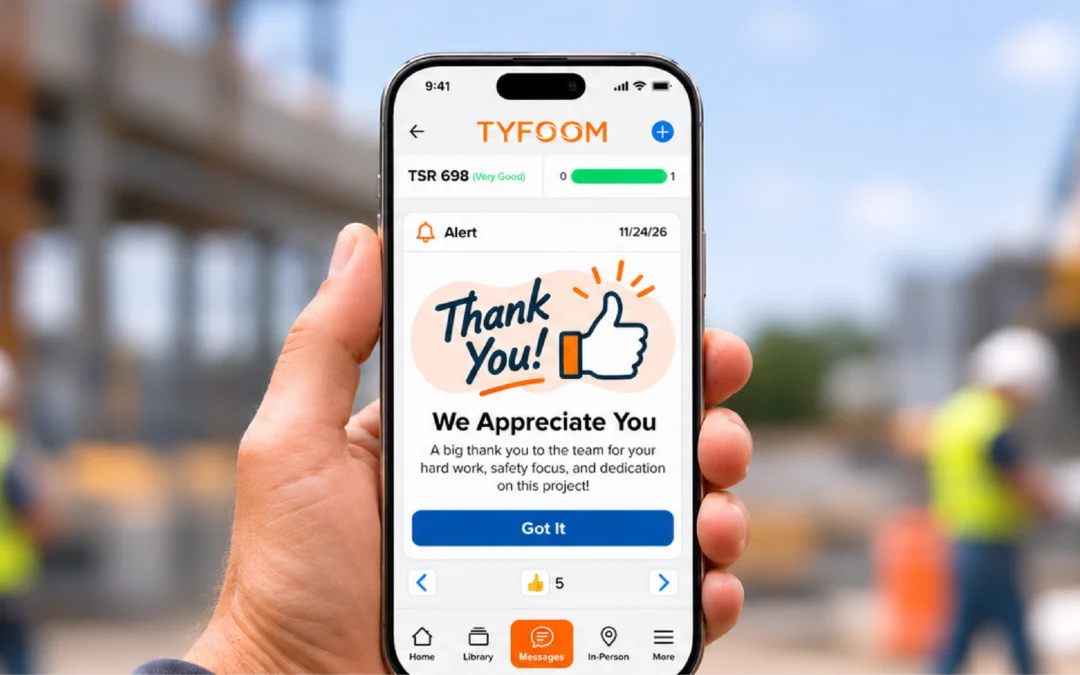
As Thanksgiving approaches, we reflect on what we’re grateful for. God, family, friends, good health, a successful year, and lowering your handicap. For business leaders, it’s also an opportunity to recognize something that doesn’t always get the attention it deserves: the people who make our organizations successful.
Every company depends on team members who show up, solve problems, serve customers, support coworkers, and find ways to make things better. Their contributions drive the results we celebrate at the end of the year.
Yet employee appreciation often gets condensed into a holiday party, an annual award, or a company-wide email thanking everyone for their hard work. While these gestures are meaningful, they’re not enough.
If organizations want team members to remain engaged, productive, and committed to their work, appreciation must become part of everyday business operations. That means recognizing contributions, communicating consistently, and investing in employee development throughout the year, not just at the end.
Employee Appreciation Has a Measurable Return
It’s easy to dismiss employee appreciation as a nice cultural initiative rather than a business priority. After all, recognition doesn’t directly manufacture products, close sales, or complete projects.
Assigning a dollar value to a sincere thank-you isn’t possible, but the outcomes associated with employee engagement are measurable.
Gallup’s research has consistently found meaningful differences between highly engaged teams and those with lower engagement.
Businesses in the top quartile of engagement achieved 23% higher profitability and 18% higher sales productivity than those in the bottom quartile. Highly engaged teams also experienced lower absenteeism, fewer safety incidents, and less turnover.
These findings don’t mean that thanking team members automatically increases profitability by 23%. Engagement involves multiple factors, including leadership, communication, recognition, and opportunities for growth. But they demonstrate that how people experience their work is closely connected to how businesses perform.
Recognition and employee development are two important ways leaders can strengthen that connection. When team members feel valued and see opportunities to grow, they’re more likely to invest their energy and expertise in helping the organization succeed.
The Cost of Feeling Unappreciated
When people don’t feel valued, they may continue showing up and completing their assigned responsibilities. But over time, they become less willing to contribute ideas, take initiative, or go beyond what’s required. Some eventually start looking for another job.
Turnover is particularly expensive because the cost of replacing a team member extends far beyond recruiting and hiring.
Organizations lose productivity while positions remain vacant. Managers spend time interviewing candidates. New hires require onboarding and training before reaching full productivity. Not to mention when experienced workers leave, they take valuable institutional knowledge with them, creating knowledge gaps that take months or even years to fill.
Employees want to know their work matters. They also want to believe their future matters. Organizations that recognize contributions and invest in helping people improve give team members more reasons to stay.
Give Thanks More Than Once Per Year
Most companies make an effort to recognize employees during the holidays with appreciation lunches, gift cards, year-end celebrations, and messages from leadership thanking everyone for another successful year.
Yes, these traditions strengthen relationships and create a sense of community, but what happens when the decorations come down?
If team members spend the next 11 months receiving little feedback, recognition, or communication, the annual celebration won’t compensate for those everyday experiences. Appreciation is most meaningful when it’s timely and specific.
Thanking an employee for solving a difficult customer problem immediately after it happens reinforces the value of her actions. Recognizing a team for completing a challenging project shows that leadership notices the effort behind the results.
These moments don’t require elaborate ceremonies or expensive rewards; they just require attention.
A culture of appreciation develops when recognition becomes a regular leadership practice rather than an annual calendar event. The same principle applies to employee development.
A once-a-year training session or performance review can’t replace consistent opportunities to learn, improve, and receive feedback. People benefit greatly from knowing where they stand and how they can continue growing.
Recognition Reinforces the Behaviors You Want Repeated
Recognition not only helps team members feel appreciated, but also communicates what success looks like. When leaders acknowledge someone for following an important safety procedure, helping a coworker, or finding a better way to complete a task, they’re reinforcing behaviors that benefit the organization.
Other employees notice what gets recognized. Over time, these examples help shape expectations and workplace culture.
For instance, consider a construction company that wants to strengthen its safety culture. Leadership could remind teams that safety is a priority during every monthly meeting, but what if the company also regularly recognized people who identified hazards or took extra precautions to protect their coworkers?
Employees gain concrete examples of what the organization values.
Recognition becomes even more powerful when paired with employee development. Instead of simply celebrating a successful behavior, companies can document it and teach others how to repeat it.
A short video demonstrating an effective technique can turn one person’s accomplishment into a learning opportunity for all. The employee receives recognition, coworkers gain useful knowledge, and the organization benefits from stronger overall performance.
Your People Want More Than a Paycheck
Of course, compensation matters, and employees deserve to be paid fairly for their work. But compensation alone doesn’t determine whether someone feels fulfilled, engaged, or committed to an organization. People also want to contribute, develop their abilities, and find meaning in their work.
Team members who perform the same tasks year after year without learning anything new will eventually feel stuck, even if they’re good at the job. Investing in someone’s growth sends a clear message: We see your potential, and we want to help you reach it.
Employee development doesn’t always require expensive courses, conferences, or formal certification programs. Sometimes it means giving workers access to the expertise of experienced coworkers or providing short lessons that help them improve a specific skill. Other times, it means offering opportunities to share what they’ve learned with others.
When learning becomes part of the daily routine, employees continue building confidence and competence without stepping away from their responsibilities for hours at a time.
Appreciation Should Create Opportunities, Not Just Applause
One of the best ways to recognize high-performing employees is giving them an opportunity to make a broader impact. Every organization has people who have developed valuable expertise through years of experience. Too often though, that knowledge remains confined to a small group of coworkers.
What if companies invited these employees to become teachers?
With user-generated training content, experienced team members can record short videos demonstrating techniques, sharing advice, or explaining solutions to common challenges.
Daily microlearning supports this approach by giving people regular opportunities to build skills, learn from coworkers, and stay connected to organizational priorities.
Similarly, digital badges publicly acknowledge progress and accomplishments.
Together, these activities make employee development and appreciation part of the experience rather than separate initiatives competing for attention. And because they’re built into everyday routines, companies don’t have to wait for the next holiday or annual review to demonstrate that their people matter.
Gratitude is a Year-Round Investment
Thanksgiving provides a valuable reminder to appreciate the people who contribute to our success. Many companies take this opportunity to thank their employees, celebrate accomplishments, and recognize the hard work that keeps their organizations moving forward.
But smart business leaders carry this appreciation into the rest of the year. Employees shouldn’t have to wait until Q4 to know they’re valued.
The most successful organizations make appreciation visible every day because gratitude shouldn’t just be expressed at Thanksgiving, but practiced all year long.
Learn how you can support stronger engagement, better retention and improved performance for your own organization by scheduling a meeting to speak with a Tyfoom training consultant today.
Happy Thanksgiving!