Construction may happen one project at a time, but the knowledge needed to do the work safely and effectively shouldn’t stay trapped on a single job site.
This is especially true for Hughes General Contractors. Since 1958, Hughes has grown into a Top 10 Contractor by Utah Construction Design, with teams working across Utah and Wyoming. The organization also partners with numerous subcontractors, making clear communication, consistent training and cross-company coordination absolutely essential.
But rapid growth created a familiar challenge: How do you keep knowledge moving when your people aren’t all in the same place? For Hughes, the answer was sharing.
Using Tyfoom, the company found new ways to share training videos, forms, safety information and even content from partner groups. The result was stronger workforce engagement, more accessible training and better collaboration across job sites – all without requiring Hughes to create everything from scratch.
Preventing the Brain Drain
As Hughes grew, valuable knowledge didn’t always make it from one project or team to another. Employees were scattered across job sites in multiple states, training content was constrained by internal resources, and communication between contractors and subcontractors wasn’t always seamless.
Even important safety information could get lost in the shuffle.
“When I first started as a Field Engineer, I noticed that every job site had a little paper hanging up with a bunch of numbers on it,” explained Training Director Chelsea Steadman. I didn’t know what it meant. Finally, one day I asked, and those numbers were how we were doing on our safety goals. I didn’t know we had safety goals at Hughes.”
Hughes needed a better way to get information in front of people – and make that information meaningful enough that team members would actually pay attention. But there was another problem: Time.
“I’m one person, so to have content and badges readily available to share with our organization really helps me keep fresh content coming,” said Steadman.
Instead of treating workforce engagement as something one training director had to manufacture alone, Hughes began tapping into something much bigger: The collective knowledge of employees and partner companies.
Sharing Goes Both Ways
Organizations don’t need to create every piece of training. Hughes began using Tyfoom’s content-sharing capabilities to access videos and badges developed by others. Suddenly, its training library could expand without requiring Steadman to script, film and produce every lesson herself.
One example came from Little Giant Ladders.
“Little Giant Ladders shared videos with us and they’ll share videos with anyone on Tyfoom,” said Steadman. “I posted the ladder badge, and within three days, over 100 people in our company had watched the four videos and completed the badge. So employees really do care. They want the training.”
But Hughes didn’t simply consume other companies’ content. It began sharing its own knowledge with project partners, too.
After Hughes was awarded a project involving J&M Steel, Steadman shared applicable videos with J&M so its team wouldn’t have to duplicate the same work. Hughes also created a sharing tag for forms, allowing information to move between companies.
Giving everyone access to consistent content reduces reliance on memory, word of mouth and one-off explanations. Employees can work from the same information and collaborate with greater consistency.
Put the Answer Where the Question Happens
Content sharing becomes even more valuable when team members can access information at the exact moment they need it.
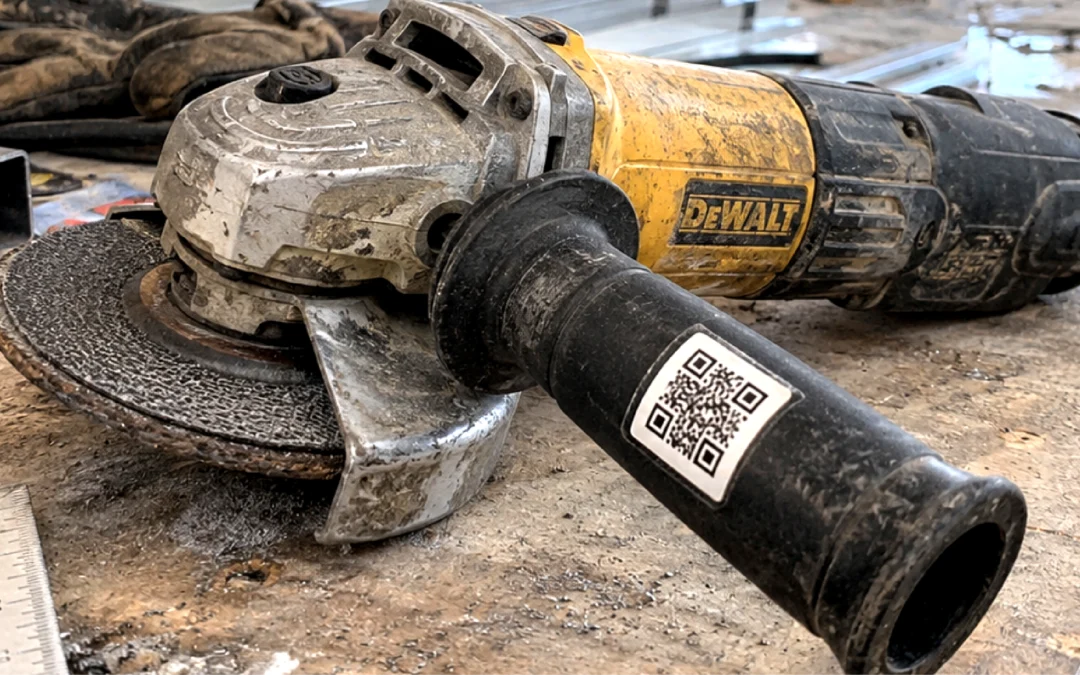
Hughes began using QR codes to connect physical equipment and supplies with digital training.
Industrial Supply, for example, shared videos that Hughes could make available through QR codes on first aid boxes. Employees with a question could scan the code, watch the video and immediately get the information they needed.
Hughes planned to take the same approach with tools and equipment to boost its own workforce engagement.
Steadman explained, “I’m really excited to be able to put QR codes on these tools and say, ‘Hey, this is how you replace the grinder wheel.’ You’d be surprised how many people step on site and they don’t know how to replace the grinder wheel, for instance.”
Team members don’t need to waste time hunting through a binder, tracking down a supervisor or hoping they remember something from a training six months ago. Put the answer on the tool!
Employees get more confidence and tasks are completed correctly the first time. It’s a win-win!
Engagement Isn’t Just About Safety Training
Hughes also discovered that the same platform used for job site learning could help connect workers in less formal ways. For example, during Wellness Month, the company moved beyond a traditional one-day wellness fair:
“We did some different challenges through the Tyfoom app and gave out prizes,” explained Steadman. “We created a form for a steps challenge. Tyfoom automatically sent a short form daily that our people filled out with their number of steps or miles. It’s been really awesome to get true company engagement instead of just ‘Hey, it’s Wellness Month. Be a little bit healthier. Good luck.’”
Strong workforce engagement requires opportunities for employees to do something – to contribute, respond, compete, learn or share. Instead of simply telling people Wellness Month was happening, Hughes gave its teams a reason to participate throughout it. And that same principle can apply to training, communication and culture.
Sharing is Caring
Hughes’ equipment inspection process shows what happens when employees can easily share information from the field.
The company recorded more than 800 equipment inspections in just three months. Team members could submit forms with photographs and specific details about repair needs rather than sending scattered text messages to the Equipment Manager (EQ).
“I was talking to our EQ, who is our main mechanic. I asked him how these inspection forms have benefited him, and he said they’ve been awesome to have. He used to just get a text message, but now employees can send pictures so he immediately knows it’s the front windshield that’s broken, not the back windshield, for instance. He’s able to order needed materials before he even comes on site,” said Steadman.
Multiple mechanics can also access the information, rather than funneling every request through one person.
This side of workforce engagement is easy to overlook. Rather than just focusing on whether people watch a video or complete a training, employees can actively contribute information that helps the rest of the team work better.
Making Safety Something Everyone Can See
Hughes also used content sharing to solve the visibility problem Steadman noticed when she first joined the company.
Instead of leaving safety numbers hanging on a piece of paper without context, Hughes began creating monthly videos about TSR scores, near misses, safety goals and overall performance.
“Tyfoom has made it so our people can actually know what our safety goals are,” said Steadman. “At the end of every month, we do our safety metrics, and I send out a video. I usually go out and film a couple of guys, and they say the number. It’s been really awesome to strengthen that culture of safety. Our employees never have to wonder where we’re at on our goals.”
Safety shifts from a corporate initiative into a shared responsibility.
Share More. Know More. Do More.
Hughes’ experience offers a simple lesson: Knowledge becomes more valuable when it flows freely.
A useful ladder video shouldn’t stay with the company that created it. A job site insight shouldn’t stay with one superintendent. And a safety metric shouldn’t live on a piece of paper that nobody understands.
By making sharing a core part of its workforce engagement strategy, Hughes has expanded its training resources, given employees faster access to useful information and created better ways for teams and partner companies to work together.
And Hughes isn’t finished.
“I’ve barely scratched the surface on how we can really utilize Tyfoom,” said Steadman. “But so far, Tyfoom has helped us do more than we ever could have alone.”
When knowledge is easy to share, everyone gets better together. Learn how you can get insight flowing through your whole organization by scheduling a meeting to speak with a Tyfoom training consultant today!