
Most people don’t even hesitate. They turn to the person who’s done it before, figured it out and can explain it in 30 seconds without overcomplicating it. That instinct is the basis for user-generated content, and it’s changing how companies think about training.
The reality is most training doesn’t stick long term. Employees click through it as fast as they can, playing recordings on 1.5x or 2x speed. Maybe they pass a quiz. Then they get back to work and do things the same way they always have.
Most people aren’t completely apathetic, and it’s not even that they don’t care. It’s because most training feels disconnected from reality, built far away from the actual work happening on the floor, in the field or with customers.
Instead of relying only on top-down training, companies are starting to learn from the people who are already doing the job every day. The result? Training that not only feels real, but is also relevant and useful.
What Is User-Generated Content?
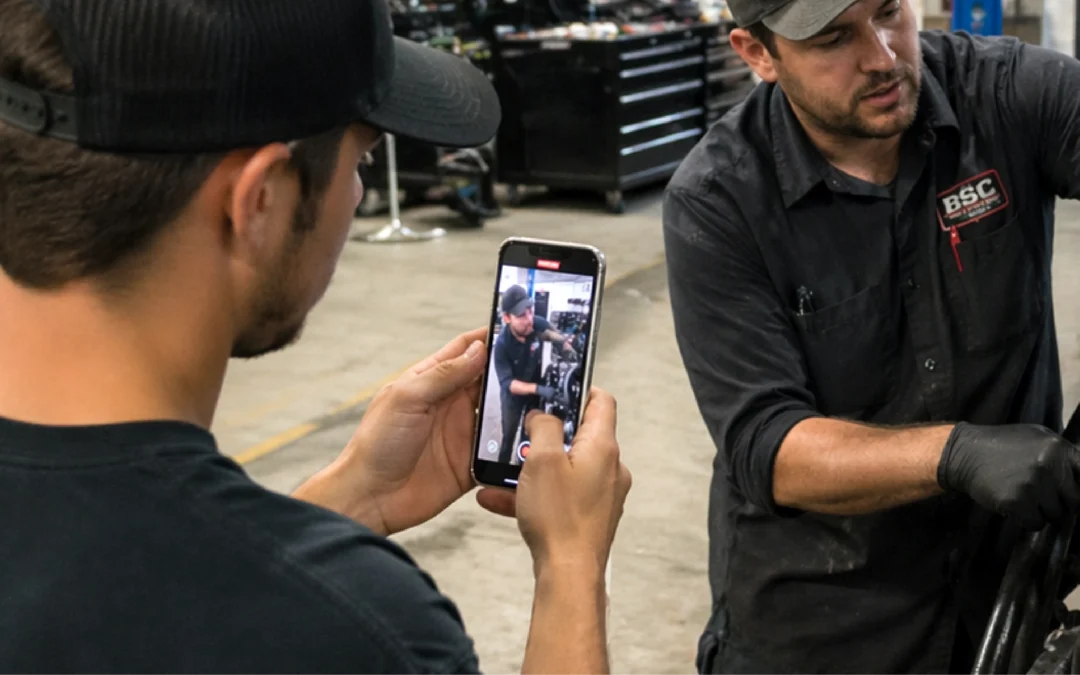
At a simple level, user-generated content is any content created by your employees instead of your training team. In the context of training, that usually looks like a:
- Technician recording how she fixes a common issue
- Team lead showing how he runs a smooth shift hand-off
- Sales rep explaining how she handles objections
- Warehouse worker demonstrating a faster or safer way to complete a task
It’s not scripted or overly polished, and that’s exactly why it works. UGC captures how the job actually gets done rather than how we think it gets done.
How User-Generated Content Boosts Employee Training
UGC acts as the bridge between learning and doing. Short, peer-created videos show what “good” actually looks like, fill in the gaps formal training misses and give context that’s hard to explain in writing. Instead of guessing how to apply training, employees can see it and immediately do it themselves.
Every company has go-to people. You know, the ones everyone asks for help. The ones who just know how to get things done faster, safer or better. The issue is that knowledge usually lives in their heads.
UGC captures that expertise and makes it shareable: Record it once, and everyone else benefits. It’s one of the fastest ways to preserve institutional knowledge without slowing people down.
Sometimes employees don’t need a full training session, they just need a quick answer. A short clip can solve a problem on the spot, reducing mistakes and saving time.
Plus, when employees create content, training stops feeling like something being pushed onto them; it becomes something they’re part of shifting their mindset from passive to active.
Why User-Generated Content Works So Well
User-generated content aligns with how people naturally learn and trust information. For example:
- People trust their peers more. If you’ve ever learned something faster from a coworker than from a training manual, you already understand this. People trust someone who does the same job and who speaks their language. It feels less like instruction and more like friendly advice from someone who’s been there before.
- It’s immediately useful. Traditional training often focuses on theory. UGC focuses on action. Employees aren’t just hearing what to do, they’re seeing HOW to do it and WHEN to do it.
- It’s easier to remember. Short, visual content sticks. A quick video showing how to complete a task is far easier to remember than a paragraph explaining it. That’s why UGC works so well in microlearning: It’s short, focused and easy to revisit when needed.
- It’s faster to create. Traditional training takes time. A LOT of it. Planning, scripting, approvals all rack up the payroll hours. With UGC, employees can record on their phone, share it in minutes and easily update content as things change. That speed ensures training stays fresh and relevant.
- It keeps people engaged. Hearing from different people across the organization keeps content novel. It breaks the monotony of a single “training voice.” User-generated content also feels more authentic, which naturally holds attention longer, boosting retention.
- Teaching reinforces learning. The people creating UGC are learning too. When team members explain a process, they think through it more clearly, catching gaps in their understanding. This in turn reinforces what they already know. With UGC, you train the audience and strengthen your top performers at the same time. A huge win-win!
What Makes User-Generated Content Actually Work
Not all user-generated content is created equal. A few simple guidelines can make a big difference:
- Keep it short. Aim for 1-2 minutes. Short content is easier to watch, digest and rewatch when needed.
- Focus on one thing. Each video should answer one question or show one task. Employees can then find exactly what they need without digging through long videos or training modules.
- Don’t overcomplicate it. You don’t need perfect lighting or studio equipment. Clear audio and a steady shot are enough. Overproducing UGC can actually make it feel less authentic.
- Use a simple structure. A quick framework keeps things clear with no fluff:
- When would you use this?
- What do you do?
- Why does it work?
- What should you remember?
Make it easy to participate. If creating content feels like a chore, people won’t do it. The easier it is to record and share, the more content you’ll get and the more effective your training becomes.
The Bigger Impact
With user-generated content, companies can speed up onboarding, greatly reduce repeat mistakes, improve consistency across teams and build a stronger sense of ownership.
And maybe most importantly, it creates a system where knowledge doesn’t get stuck with a few people: It spreads.
Tyfoom makes it easy to capture and deliver UGC in a way that actually fits into the flow of work. Instead of long training sessions, employees get:
- Short, daily videos
- Content that’s easy to watch and apply
- A steady stream of real-world knowledge from their peers
And because everything is tracked, companies can see what’s working and where to improve.
It makes training more relevant, more trusted and easier to apply. It turns everyday work into learning opportunities. And it shifts training from something employees have to sit through to something they actually use and enjoy.
To see how you can start capturing the knowledge in your own organization, schedule a demo with a Tyfoom training consultant today!