
Somewhere along the line, workplace training got a little obsessed with looking expensive. Cue the generic upbeat music. The stock footage of smiling employees in spotless offices. The falsely cheery narrator who you kind of want to punch in the throat. The scripted dialogue nobody has ever said out loud in real life. Like ever.
And yet, even with the $10,000 production price tag, team members still forget everything five minutes later.
Turns out that making training look polished is not the same thing as making it effective. In fact, overly produced training content can actually hurt engagement. Why?
Because most employees don’t want training that feels like a cheesy corporate commercial. They want training that feels useful, relevant and real. In other words, human.
The Problem With “Perfect” Training
Traditional training usually starts with good intentions. Organizations want professionalism, so they spend weeks (or months…or years) creating polished training materials.
Entire teams get involved. Scripts are written with every sentence scrutinized until it’s approved by eight departments. In the end, the final product often looks impressive. The problem is that teams don’t connect with it because polished content feels disconnected from actual work.
Employees immediately recognize when training comes across as artificial: The dialogue feels too scripted, the environment too generic, the examples too vague, etc. It creates distance, and distance kills engagement.
Authenticity Beats Production Value
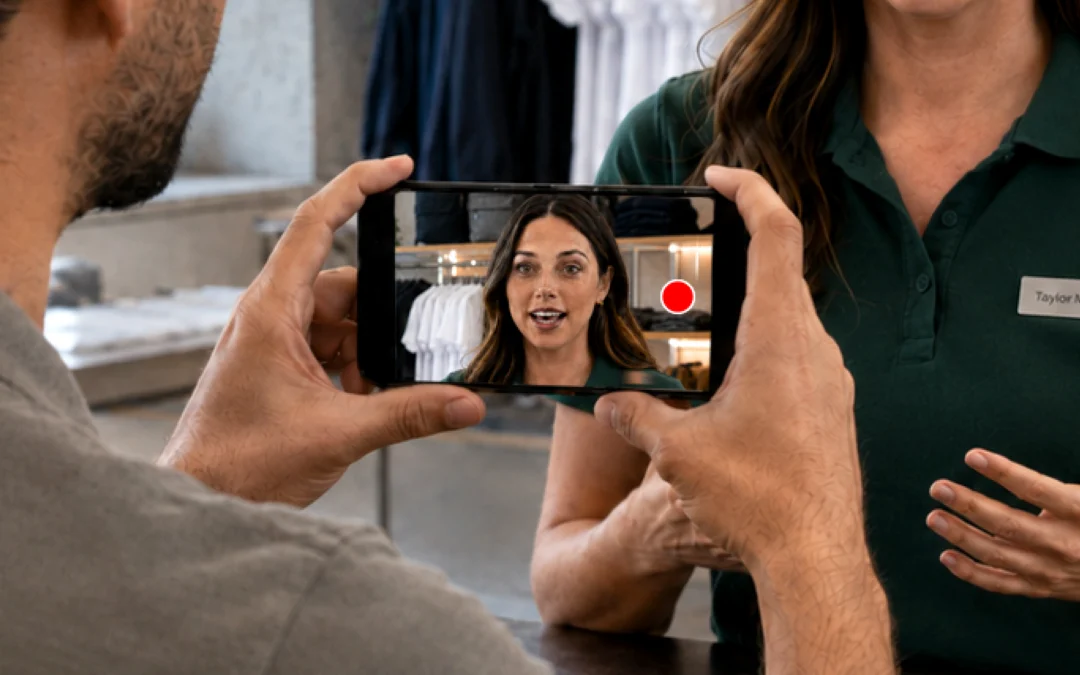
Think about how people consume content in real life: TikTok, YouTube Shorts, and Instagram Reels. No big budgets or Hollywood-level equipment – just people doing and explaining things with a phone camera.
This authenticity lends itself well to workplace learning too. Teams are far more likely to engage with training that feels practical and relatable than training that feels formal and staged.
When co-workers create short videos explaining real tasks in real work environments, the training immediately becomes more believable. The content feels grounded because it is grounded. No actors or scripts or fake scenarios. Just real people sharing what actually works.
Teams Trust Coworkers More Than Top-Down Messaging
Employees trust people who do the job. Not because leadership lacks credibility, but because peers understand the reality of the work. They know the shortcuts, the frustrations, the pain points and the little details that formal training often misses.
When a co-worker explains how to avoid a mistake or complete a process more efficiently, team members pay attention because the advice feels earned.
There’s a huge psychological difference between: “Leadership says this is the process.” And: “Here’s how I actually handle this every day.” Instead of being theoretical, the information is immediately useful.
Overproduction Slows Everything Down
Another issue with polished training is speed. Traditional content creation is just too slow. In fact, it takes an average of 48 hours to create a single hour of content. Even worse, by the time scripts are approved, videos edited, graphics finalized, and compliance reviews complete, the information may already be outdated.
The reality is, work environments change constantly, processes evolve, equipment changes, policies shift and new problems pop up every week. Organizations need training that can move at the speed of work.
Instead of waiting months for a formal training module, employees can create and share quick, relevant content in minutes with user-generated content. For example:
- A supervisor notices a recurring issue? Record a two-minute walkthrough.
- A technician discovers a better process? Capture it on video.
- A team identifies a common mistake? Share a quick refresher clip.
People learn best when information is not only relevant and immediate, but also easy to access. Short videos created by employees can be delivered directly in the flow of work.
Rather than digging through a 45-minute course to find one answer, workers can search for a quick, practical video that solves the problem immediately. This just-in-time learning model improves retention because employees apply the information right away.
User-Generated Content Creates a Learning Culture
Another huge advantage of user-generated content is that it transforms training from a top-down initiative into a collaborative culture. Instead of relying on one department to create all learning materials, everyone becomes part of the process, shifting learning from passive to active.
Employees stop viewing training as something forced onto them and start seeing it as something they contribute to. This boosts participation and accountability, and encourages knowledge sharing. Onboarding becomes faster and people feel more engaged at work.
User-generated content also helps organizations uncover hidden expertise across their workforce. Some of the best trainers aren’t managers or executives. They’re the team members everyone naturally goes to for help.
User-generated content allows companies to scale that expertise and preserve institutional knowledge before it walks out the door.
Instead of relying on written documentation nobody reads, companies can capture practical expertise through quick videos and searchable learning libraries, turning small pieces of content into an incredibly valuable internal resource.
Simplify. Simplify. Simplify.
Complicated systems kill momentum. The easier training is to create, the more training gets created. If employees need expensive software, production teams, editing expertise, or multiple approvals just to share knowledge, the majority of people won’t do it.
But when creating content is as easy as pulling out a phone and recording a two-minute explanation? Companies can rapidly build practical, relevant training content without overwhelming managers or learning teams.
Employees don’t need training to be cinematic. They DO need it to be useful. Organizations spend enormous amounts of time trying to make training look professional, but employees don’t want training that looks impressive. They want training that helps them do their jobs better.
User-generated content is faster to create, easier to update, more relatable and often far more effective than heavily polished alternatives. Instead of perfection, the goal is connection.
A quick phone recording from a noisy job site feels real. A supervisor casually explaining a process feels human. A co-worker demonstrating a shortcut feels relatable. When training feels authentic, employees engage with it differently. They trust it more, apply it faster, and retain it longer, saving you time, money, and energy.
You know, what good training is supposed to do.
To learn how you can get better training for less by capturing your own internal expertise, schedule a meeting to speak with a Tyfoom training consultant today!