Most organizations approach workforce development by identifying what’s going wrong. They look for performance gaps, evaluate weaknesses and develop training to correct them. There’s nothing inherently wrong with that approach, but it overlooks something potentially more valuable – the people who are already getting it right.
What if, instead of spending so much time trying to fix what isn’t working, we spent more time replicating what is?
Shrimp, Sweet Potato Greens and a Big Idea
In 1990, Jerry Sternin arrived in Vietnam to tackle a seemingly impossible problem. Childhood malnutrition was rampant, and he had been tasked by Save the Children to improve the situation. The Vietnamese government gave him six months to make a meaningful difference.
Sternin didn’t have the time, money, or resources to solve a problem that experts believed stemmed from poverty, poor sanitation, and unsafe drinking water, so he tried something different.
Instead of studying the children who were malnourished, he looked for children who were healthy despite living in the same impoverished communities. He wanted to know what those families were doing differently…and he discovered something fascinating.
Some mothers fed their children four small meals throughout the day instead of two large ones. They closely monitored how much their children ate and added tiny shrimp from rice paddies and sweet potato greens to their meals. Sternin named these successful exceptions “bright spots.”
Shrimp and sweet potato greens weren’t expensive imported ingredients. In fact, they were traditionally regarded as “low quality” foods. Rather than lecture families about nutrition, he helped communities practice the behaviors that were already producing healthier children. Mothers learned from other mothers who faced the same challenges and had access to the same resources.
Within six months, 65% of participating children were better nourished. The approach eventually reached 2.2 million people across 265 villages.
So, What Exactly Is the Bright Spots Method?
The Bright Spots method is based on a simple idea: Find people who are succeeding under the same conditions as everyone else, identify what they’re doing differently and help others repeat those behaviors.
For organizations, this is closely related to the concept of positive deviance. Successful individuals aren’t operating with some enormous advantage (they have access to roughly the same tools, resources and opportunities as their peers), but they’re achieving better outcomes.
For workforce development, the Bright Spots method shifts the focus from teaching employees what experts think should work to showing them what their coworkers have already proven works.
Your Best Team Members Are Your Best Training Resource
Most companies develop training after leadership identifies a performance problem and someone researches best practices. A training team then builds a course and employees complete said course. Management sits and waits, hoping performance improves.
Meanwhile, somewhere in the company, a team member already knows a better, faster, safer way to do something. He already solved the problem, but no one thought to ask him how.
Instead of immediately building a new training program, investigate what’s happening differently.
Talk to your people. Watch them work. Ask questions. Look for specific behaviors that might explain their results.
Beware of “True But Useless” Training
Sternin recognized that simply telling families what to do to make their children better nourished wouldn’t work. He deemed this kind of information “true but useless.” The nutritional advice could save lives, but coming from an outsider, it wasn’t going to change behavior.
Workplace training is full of information that’s technically correct but not particularly useful. For example, a course that explains the ideal way to handle a customer interaction, but the examples don’t portray the customers your people actually encounter.
Or a leadership training that offers wonderful advice about communication without acknowledging the realities of managing a crew across three jobsites. The information isn’t necessarily wrong, it just doesn’t translate into action.
Effective workforce development needs to answer a more practical question: How does this actually work HERE, with our people, our equipment and our constraints?
Rather than employees imagining how an outside expert’s advice might apply to their jobs, they see coworkers who are already succeeding in the same environment.
The Magic of User-Generated Content
Imagine you’ve discovered your highest-performing technician uses a particular troubleshooting technique that saves 10 minutes on a common repair. How do you share that technique?
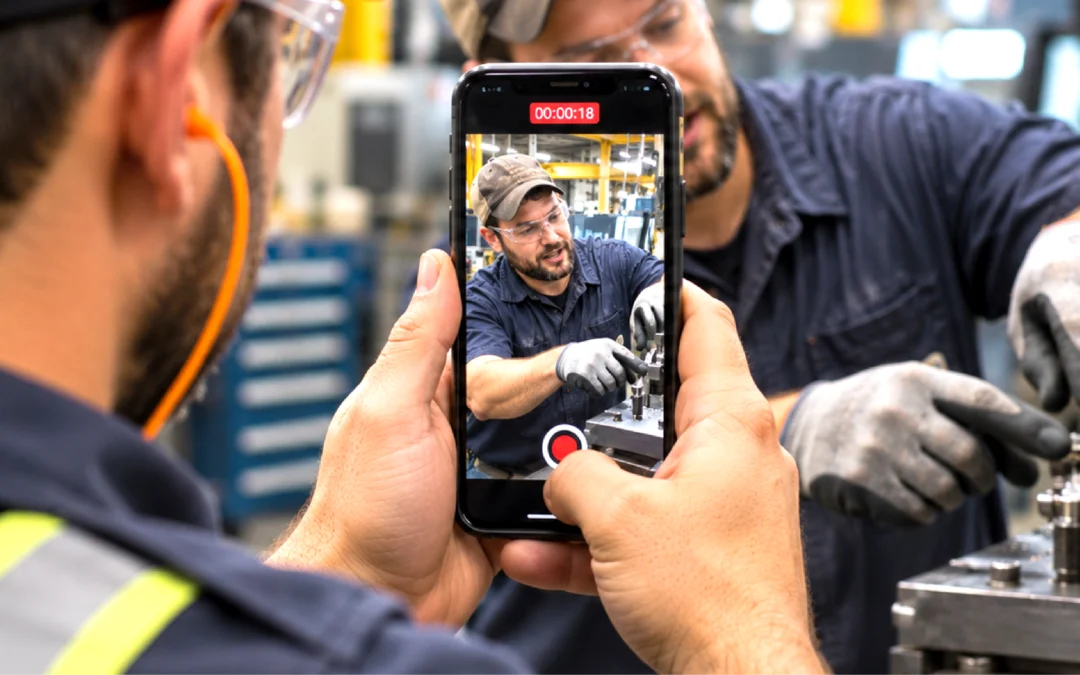
You could build a PowerPoint, schedule a company-wide meeting or hire a production crew to create a profession training video…or you could just hand the technician a phone. In less than two minutes, the technician can demonstrate the technique, explain why it works and show coworkers what to look for.
Short, employee-created videos make it possible to capture successful behaviors while they’re happening. Instead of relying on secondhand explanations, team members learn directly from the people doing the work.
For workforce development, this approach offers two major advantages: (1) Training stays directly relevant and (2) successful practices can scale. The content doesn’t need to be fancy. A visible demonstration and clear audio are far more important than professional lighting or an elaborate script.
Turn One Bright Spot Into Hundreds
Finding a bright spot is exciting, but the real payoff comes from making that success repeatable. For example, suppose an employee discovers a technique that saves five minutes on a task performed 10 times per day. That’s 50 minutes saved.
Now imagine 100 employees adopting the same technique:
- Daily time saved: 83.3 hrs
- Annual time saved: 20,833 hrs
- At $30/hour: $625K saved per year
Of course, actual results depend on how consistently teams adopt the technique and whether it works across different situations. BUT small improvements can become significant when multiplied across an organization.
Daily microlearning helps! Instead of introducing a new behavior once during a training session and hoping employees remember it, organizations reinforce important skills through short, consistent lessons.
Teams watch a coworker demonstrate a technique, practice it during their normal work and receive reminders to keep the behavior top of mind. Over time, these small lessons become part of how work gets done.
A strong workforce development strategy not only shares information, but also helps your people translate that information into better habits.
Stop Reinventing. Start Replicating.
One of the biggest obstacles to spreading successful behaviors is that organizational knowledge tends to stay local. A centralized, searchable training library easily shares best practices with the entire company.
Workforce development becomes more collaborative, and success is no longer confined to one team, shift or location. Team members actively contribute the ideas and techniques that make the company better.
The beauty of the Bright Spots method is it doesn’t require you to reinvent the wheel. When combined with user-generated content and daily microlearning, this approach turns individual improvements into organization-wide success.
Start capturing your company’s own bright spots for a smarter, faster, safer workforce today by scheduling a meeting to speak with a Tyfoom training consultant.